Japan
Day 1 - Touchdown In Japan

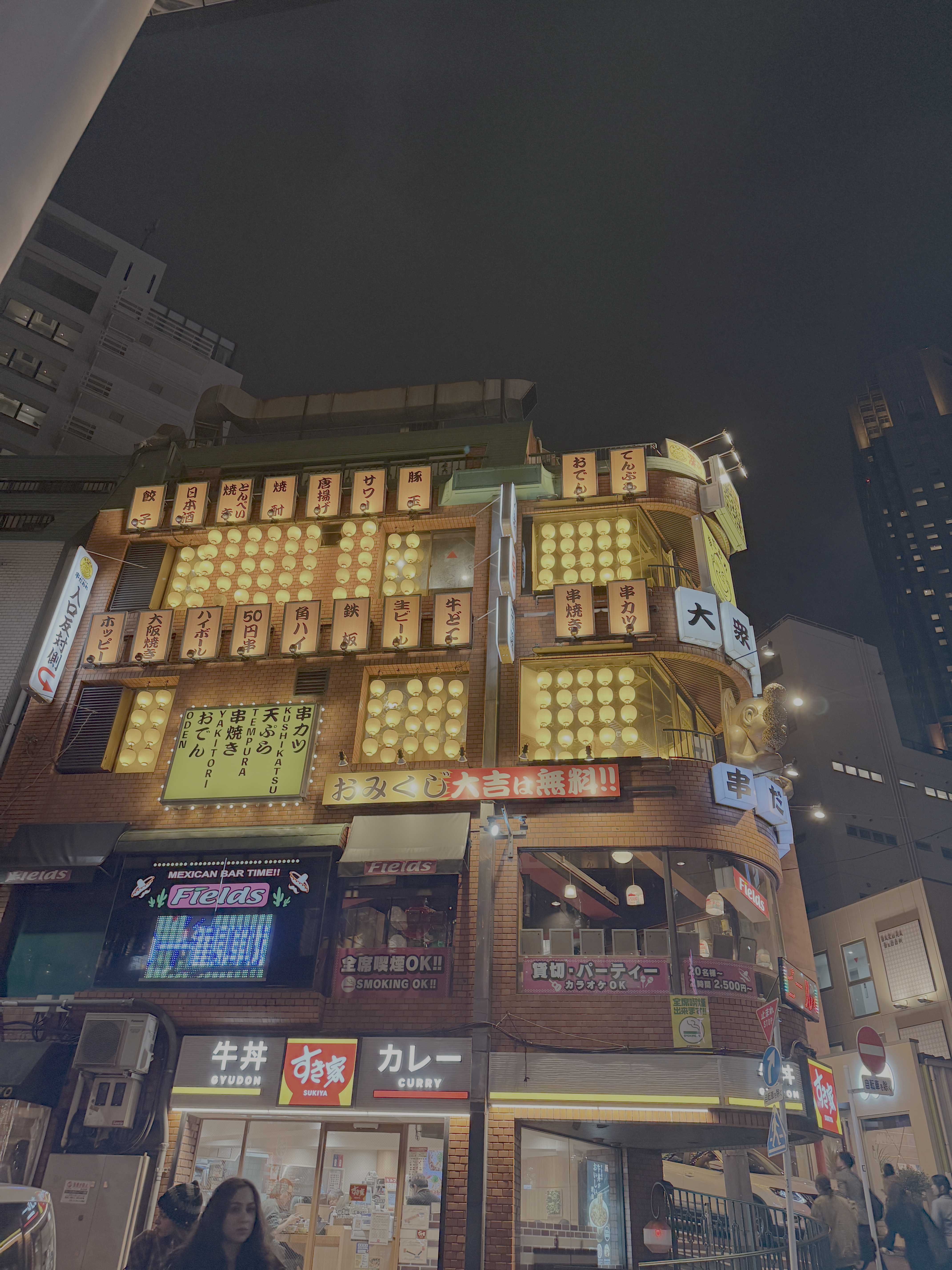
It’s a surreal feeling when the planning and anticipation finally come to fruition. We woke at 4:30am for a long day of travel, and it was already worth it. Work had been relentless. Morgan and I had been going nonstop to earn this trip, and I’d just wrapped up 40 hours in four days. In the millisecond between the first sound of the alarm and my eyes opening, I felt something I hadn’t felt in a long time: pure, blissful euphoria. I knew what was in store, and I couldn’t wait another second. We hit the road at 5am to reach the airport by 8.
We always leave plenty of time when traveling, and with the stories of long TSA lines lately, we planned for the worst. Luckily, we breezed through security in minutes, the easiest line we’ve ever done. That gave us time to relax in the United Lounge, where we toasted the start of the trip with a few mimosas (high spirits, figuratively and literally). Over cheap champagne and microwaved eggs, I kept planning. We’d sorted our must-dos into three categories: shopping, food, and sights. I used Google ‘My Maps’, which lets you drop pins and color-code them by category, so we could see everything geographically. Tokyo is an incredibly stimulating city with little downtime, so knowing which areas cluster together makes it much easier to plan each day. At 11:20, it was time to board. Next stop: Tokyo.
After 2.5 movies, 2 hours of sleep, and some glorified hospital food, we landed around 3:00pm local time, about 18 hours into our journey. Fatigue was easy to ignore because I had a feeling the second we stepped off the plane would make it all worth it. I was right. The sounds, the signs I couldn’t read a single character of, and the rush of people marching to their gates were unlike anything I’d seen.
We were staying in Shibuya, but we landed at Narita, so we took the Skyliner to Ueno Station, where we could walk the rest of the way. The trains took some adjusting. Everything moves fast, and the stations aren’t exactly friendly to English speakers. Sure enough, we had to hop off one train after misreading the ticketing system. Lesson learned. I’d seen videos of how packed the cars get, but I wasn’t prepared for the reality. It was so crowded that Claudia couldn’t even squeeze on. Add our checked bags, and it felt like a competition for space. Between stops, when only a few people got off, a wave of new riders would push their way in, leaving everyone pressed together with no room to spare.
Both train rides totaled close to two hours, and we didn’t reach the hotel until a little after 6pm. Even then, the journey wasn’t over. Running on 2 hours of sleep and roughly 22 hours of travel, in the middle of rush hour, we found the roaring city a bit disorienting. The hotel claimed to be a 5-minute walk from the station. It took nearly 30. We finally crawled into the lobby, checked in, and dropped our bags. We set out for some much-needed food. We were too tired to find an ATM, so we made do with what we had and landed at a mellow spot with some of the best sashimi I’ve ever had: bluefin, yellowtail, shrimp, and sea bream. I’d never tried sea bream before, and it may have been my favorite. Each meal came with a drink, so we ordered a classic lemon sour fizz.
The dinner hit the spot, but as an American, I wanted more. On the walk back, I spotted a familiar green, orange, and white sign: the world-famous 7-Eleven. Our mission was simple: raid the store and find anything we’d never seen before. We came away with a strawberry and cream sando, an egg salad sando, and the famous thick-cut French toast with sweet cream. We headed back to the hotel, which was probably the one clear victory of the day, devoured everything, and got ready for some much-needed sleep. It was one of the craziest travel days of my life, and I wouldn’t change a thing.
Day 2 - Cherry Blossoms and Shrines
We woke up early after another restless night, the city’s energy making it impossible to sleep deeply. I woke every three hours and even considered heading out for 3am ramen, but I was asleep again before I could decide. At 6:30am I hit the hotel gym, a nice space with cardio machines and dumbbells up to 50 pounds. First on the agenda was a 7-Eleven run for quick, easy food to hold us over through the morning.
We took the Yamanote Line to Shinjuku, then walked about 10 minutes to Shinjuku Gyoen, a vast park in the middle of the city famous for its cherry blossoms. Google said it opened at 5:30am, which turned out to be wrong. We reached the gate around 8:30 and waited in line until it opened at 9. The park was an amazing experience, with all sorts of gardens to wander through, but the best was the forest of cherry blossoms. As we approached, we could see petals floating on the wind and settling into a blanket across the dirt and roots. It was a whimsical moment that would be hard to replicate. We walked for about an hour and a half before heading back to the station.
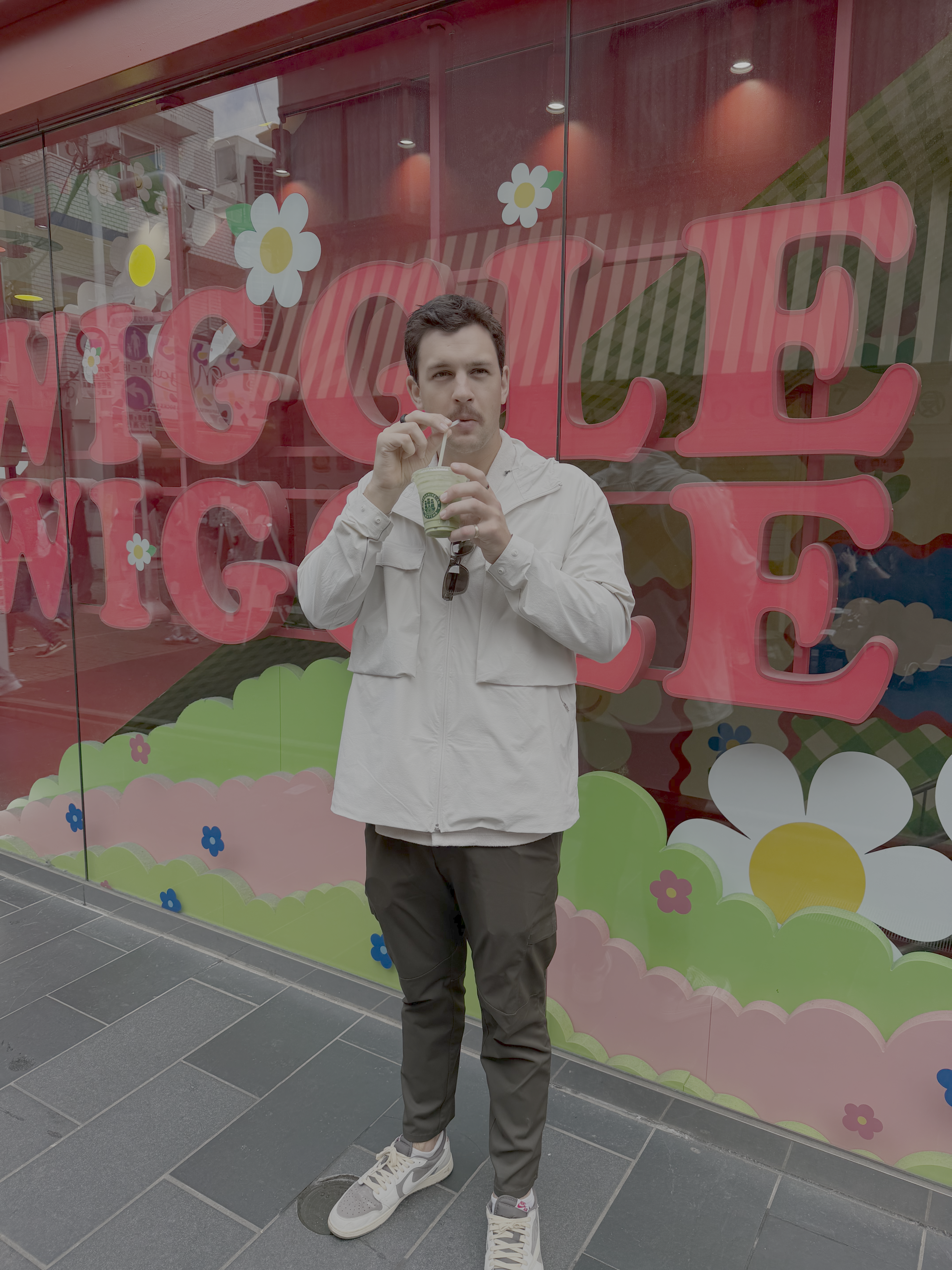
Next up was Meiji Shrine, though I accidentally missed our stop on the way (my fault). On the way back, we stumbled across a vendor selling mochi, and Claudia naturally had to get some: lemon, strawberry, kiwi, and white strawberry. All of them were delicious. I’d only ever had frozen mochi in the US, so fresh mochi was a revelation. After a short rest for our feet, we headed to Takeshita Street, the famous strip packed with shops and vendors. We eventually found a matcha shop and ordered a heavy matcha and a sakura matcha, and both were amazing.
The goal was Meiji Shrine, only a 10-minute walk from Takeshita. The torii gate at the entrance was incredible, and I wasn’t expecting it to be so enormous. The walk in was peaceful. Even with plenty of people around, the path is roughly 50 feet wide, so there’s room to dodge oncoming traffic. We passed three torii gates before reaching the shrine, where we washed our hands and mouths in the traditional purification ritual. The shrine itself was magnificent and climbing the stairs revealed a courtyard, gold-plated details, and a perfectly organized rock garden at its center. Visitors toss a coin into the offering box, bow deeply twice, stand up straight, clap twice, and then close their eyes to make a prayer. It was a powerful experience. On the way out, we detoured through a garden with bonsai trees and a dried-up lakebed, still quiet and beautiful.
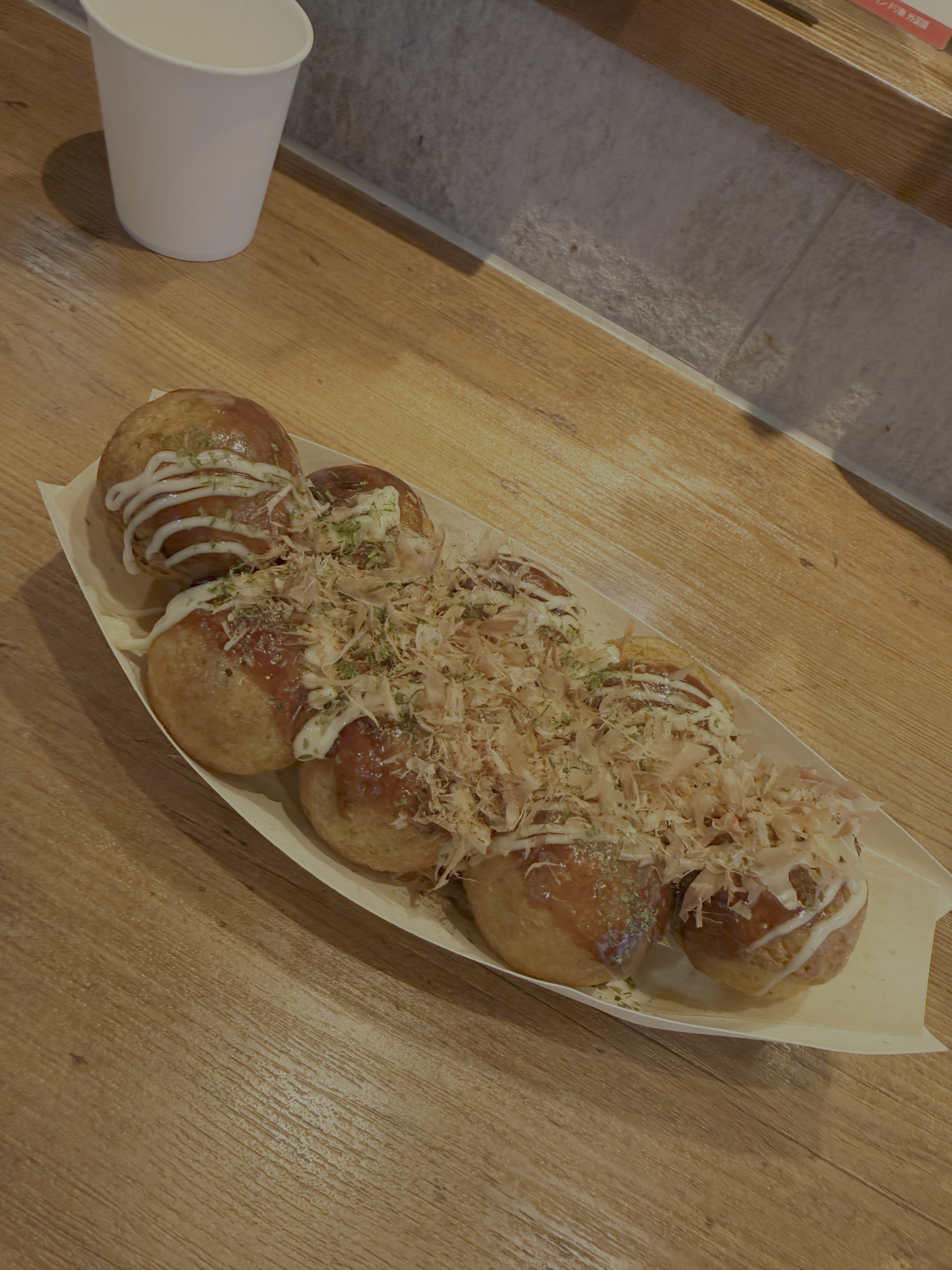
Then it was on to Nakano Broadway, where the day’s main mission was to find a watch. The alleyway was packed with street vendors, food vendors, and retail shops, filled to the brim, and it felt much more local than the other areas we’d been. Of course we had to get takoyaki and an ice-cold drink. A Suntory whisky highball with lemon and soda water has become our go-to, and it’s delicious. Nakano Broadway, if you don’t know, is one of the world’s most famous second-hand watch markets, along with anime, manga, and electronics, spread across four overwhelming floors. There are high-end shops with jaw-dropping, prestigious watches and stores with a bit of everything.
I made sure not to jump the gun, and I’m glad I waited. I found a watch I was prepared to buy, but when I went to try it on, there were 20 people ahead of me. I’d already spent 20 minutes in that shop, and another 30 wasn’t fair to the rest of the group, so I made the executive decision to leave it behind. Disappointed, I reminded myself why I was there: to find the watch. After passing through many more stores, we found it: a “used” (without a single scratch) Omega Seamaster GMT for ¥780,000, about 4,800 USD with 10% off for tax-free tourist shopping. It’s discontinued, so it was hard to find online, and it cost around 9,100 USD retail when it was in production. It spoke to me the second I saw it.
After the splurge, we went to Omotesando, where Claudia’s mission was a vintage Chanel bag. Of course she found one, and then my mom found something, and then Morgan. We all left with something, and it was a weight off our shoulders to have the big purchases out of the way. We walked home instead of taking the train and came across a chain called I’m donut?, which makes gluten-free, vegan donuts in traditional Japanese flavors, which was perfect for Morgan.
After 22,000 steps, it was time to eat donuts, have a cocktail at the hotel bar, and head into the pool, a great way to destress and ease the inflammation building throughout my body. We packed into a jacuzzi the size of a kiddie pool (we overflowed it), then went up to the room and headed out for dinner. The goal was simple: ramen. We arrived at peak dinner hour, and the place we’d picked had a very long wait. The group ahead of us had already waited 20 minutes with four groups in front of them, so we gave up. The spot looked like an underground Irish pub, and I’m determined to eat there at least once while we’re in Shibuya. We scavenged for another option, going in and out of countless shops because of the huge variety, and eventually found one.
With our bellies full of top-tier ramen and a few highballs, we made our way back to the hotel. Five minutes after my head hit the pillow, I was out cold. After the steps and the food, it was easy. Dreams fulfilled.
Day 3 - Tsukiji, Fried Bread, and Asakusa
Today was the one I’d been anticipating most. From the moment I started researching Japan, I knew Tsukiji Fish Market was a must. The rest of the crew was hesitant, but I assured them it’s not just fish. It’s so much more. Getting there was easy: about a 15-minute train ride and a 10-minute walk from the station. The market was hard to miss. The alleys were already bustling, shoulder to shoulder, and it was only 7:45. We got to work as soon as we reached the entrance. Morgan and I noticed everyone carrying matcha, so our first order of business was some much-needed caffeine. It didn’t disappoint. Every matcha we’ve had here tastes better than anything back home, thicker and richer, with barely any sweetener so you can actually taste the different notes.
Next on the list were traditional Japanese steel knives to bring home. There’s a district called Kappabashi that specializes in them, but it was a little out of the way, so the market’s selection more than did the job. Some knives were well over four figures. Morgan picked out one of the most traditional and widely used styles on pure instinct, while I went for a vegetable knife with a more square blade. We got what we came for, so the mission became food, and more food. We found an amazing vendor selling wagyu skewers and nigiri and got multiple plates of each while we waited for a soufflé pancake restaurant next door to open. We had 20 minutes to kill, and I made sure we stayed put since the line was already forming. As much as I wanted to eat a ton, I held back and shared a single plate with her so I’d have room for the rest of the market. They were incredible, the fluffiest, jiggliest pancakes I’ve ever had. I wanted more, but I had to play the long game.
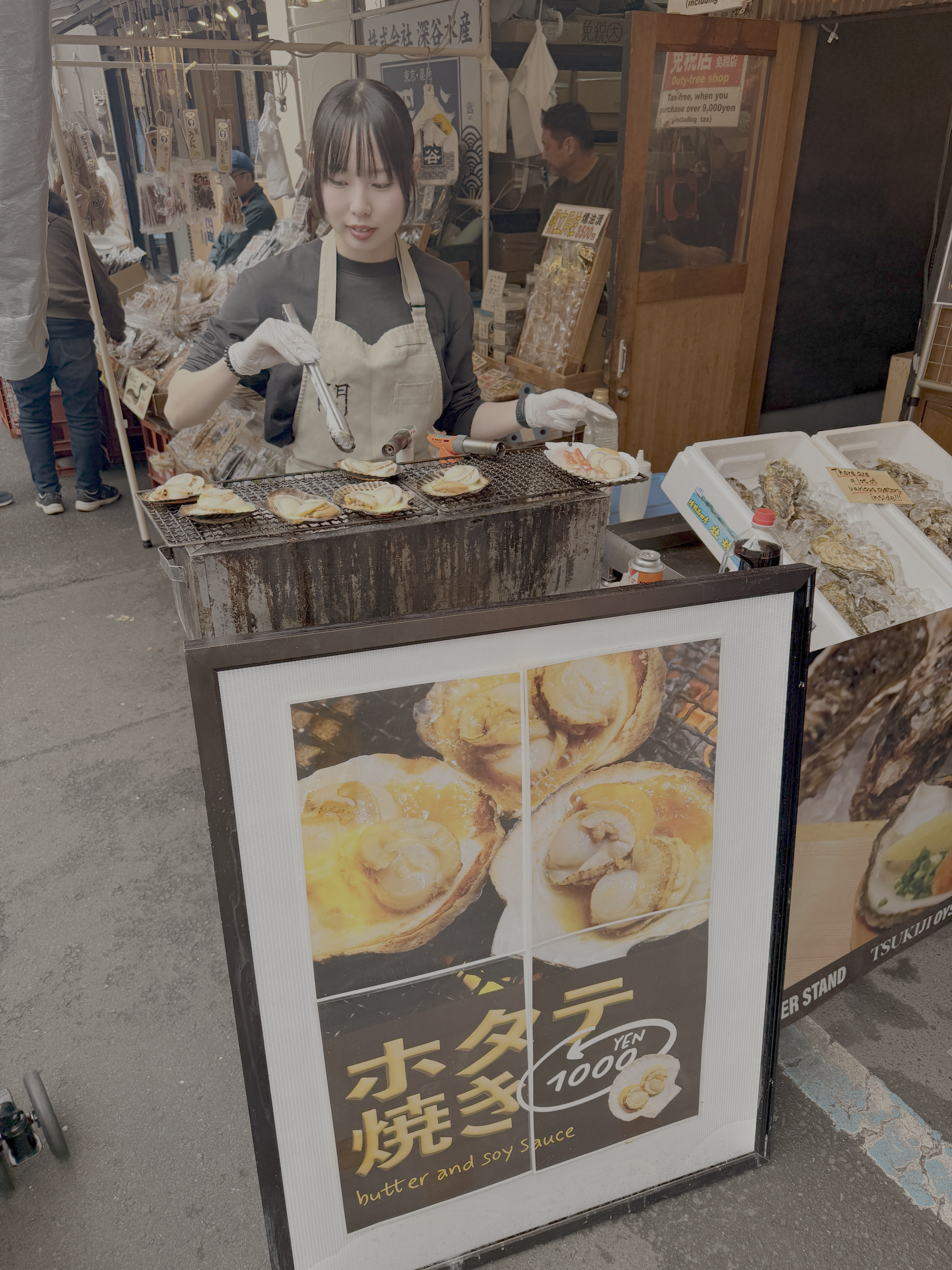
Back out in the market, the next bite was tamagoyaki, a sweet egg omelet on a stick. To be honest, I wasn’t a fan. It had a strange flavor that just wasn’t for me. Then came fresh scallops on the half shell, grilled with butter and soy sauce. I knew I needed one the moment I saw them. I was the only one interested, so I waited in line and carried mine to the stand to devour, and they were the best scallops of my life. Those were the main highlights of the market. We ate plenty more and picked up some good souvenirs, but nothing worth mentioning.
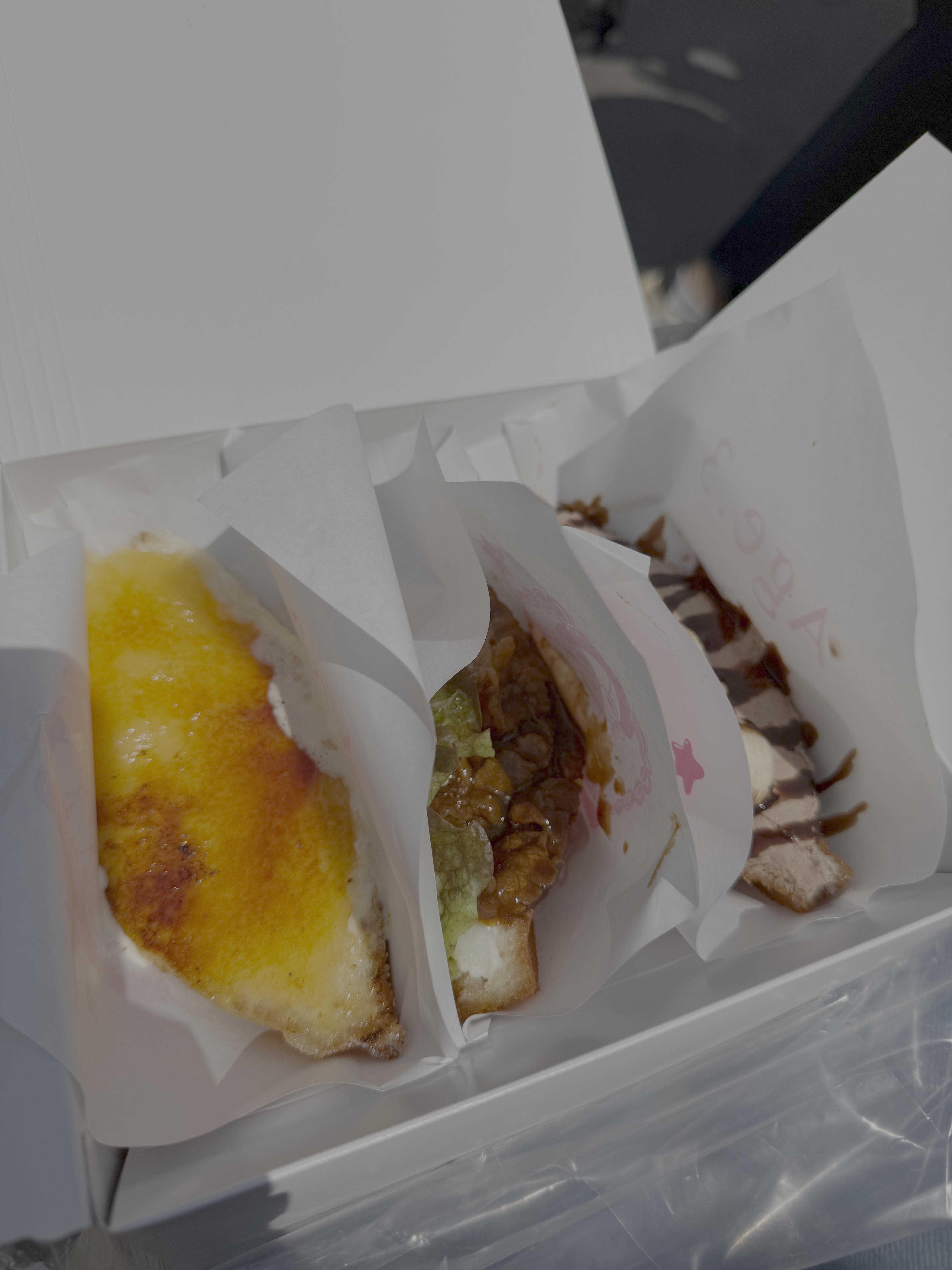
Our next stop was Age.3, another insanely popular spot known for its simple but delicious fried bread. They fry a piece of bread, slice it open, and fill it with fluffy cream in flavors like classic vanilla, chocolate, and matcha, plus a few savory options. I’m glad I remembered it, since it was only a 20-minute walk away and opened at noon. The line was already forming when we arrived, with about 10 people ahead of us who had been waiting since 9:45. By opening time it was wrapping through the streets. Restaurants and street vendors in Japan are so methodical when it comes to high demand, and they thrive under pressure. We got the classic whipped cream, the crème brûlée, the chocolate banana, and a short rib one. All were incredible, but my favorite was the classic because it wasn’t overly sweet.
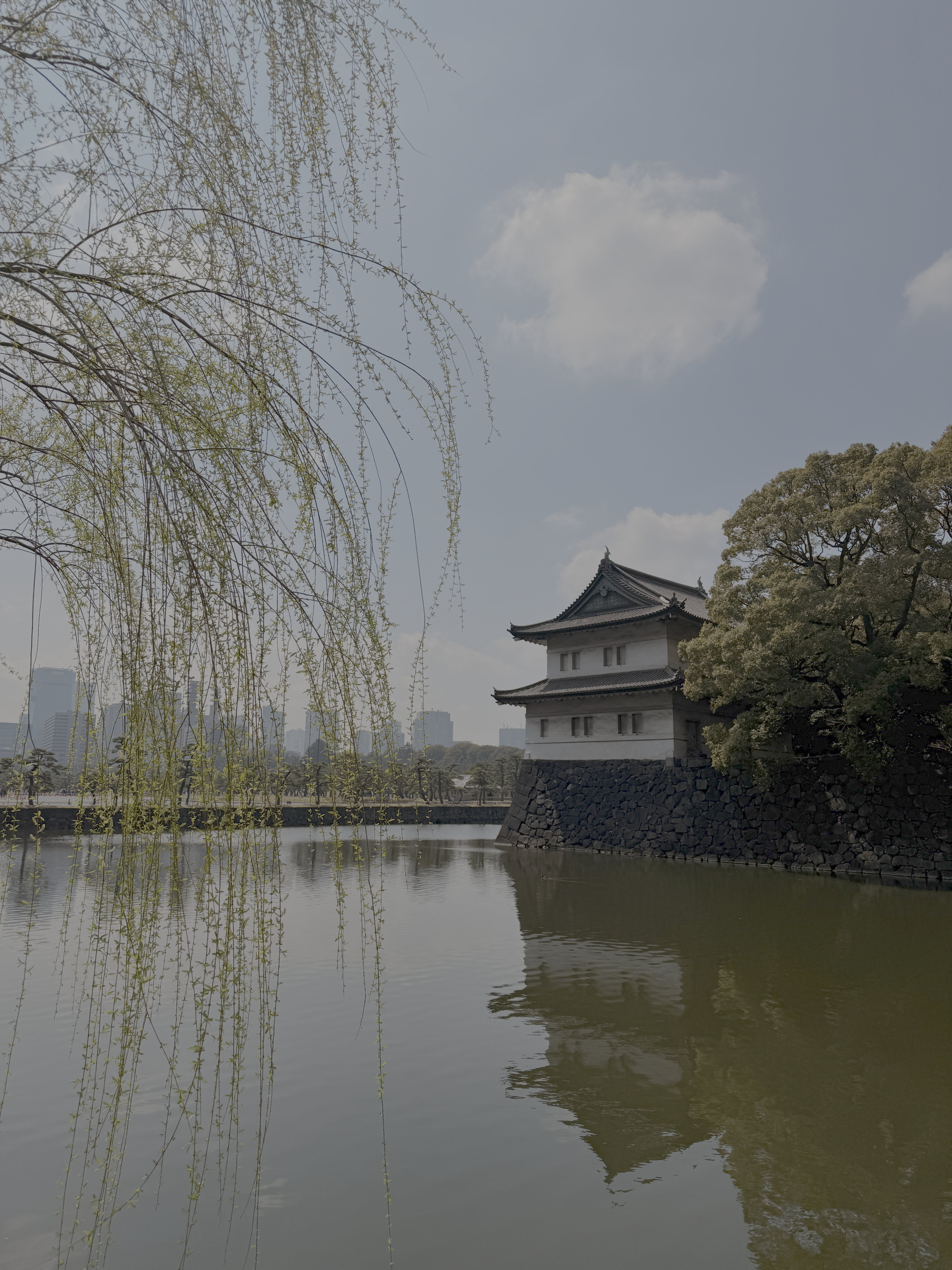
With our stomachs overflowing with joy, we set out for the Imperial Palace, a 10-minute train ride away. The grounds are vast, an unreal amount of space dedicated to a palace in the heart of Tokyo. You can’t actually enter, so we walked the perimeter and tried to catch a glimpse of what lay beyond the walls. With crowds flocking to the entrance, we changed the itinerary and headed to a popular park with cherry blossoms. It was insanely crowded, but we managed a quick nap in the park before heading to a temple in Tokyo’s Old Town. It was Akagi Shrine, which was smaller than I expected but still very pretty among the cherry blossoms. It also turned out not to be the shrine we meant to visit, so it was back on the train. The one we wanted was in Asakusa, another 15 minutes out. The train rides were really adding up, and motion sickness was starting to kick in. Rush hour was approaching, and during rush hour these trains are relentless: pushing, shoving, standing on top of someone for the whole ride, and no chance to rest your feet.
We eventually made it, and the shrine grounds held what felt like 20,000 people within a 200-meter radius. The alleys were filled to capacity and then some. Morgan and I needed food, so we settled for some Hi-Chews from the pharmacyy. At the Asakusa complex, we saw Denpō-in Temple, Senso-ji Temple, and a Shinto shrine. All of them were unreal, massive and full of color and detail, with gigantic warrior statues guarding the entrances, armed to the teeth. Once we’d had our fill and cleansed our bodies and spirits, we sat for a bit to regain our bearings. These days have little rest and a lot of activity, so we have to take a moment when we can. With grumbling stomachs and aching feet, we made our way back to the station, but before the 40-minute ride home we stopped at 7-Eleven for snacks and drinks. On the way, Pokémon cards caught my eye, but Morgan found the real jackpot: Smiskis, the one thing she’d been missing from the trip so far. They had a ton. I ended up skipping the Pokémon cards because of the absurd prices, but we filled a big bag with Smiskis, one of nearly every collection and then some. With about $95 spent on Smiski and Stitch figurines, we were finally ready to head back to Shibuya.
Shibuya is the city that never sleeps, and I’ll stand by that. New York and LA have nothing on this place. You have to penguin-shuffle along the walkways under the bridge. The shoe store had at least a two-hour wait, so we skipped it. The jacuzzi was calling our names, so we headed home, and afterward Morgan and I hit the town. We shopped at Uniqlo and Don Quijote, two of Japan’s famous stores. It was Saturday night, so the crowds were astronomical again, but our time in Shibuya was running out, so it was worth it. When we’d had our fill of the city, we went looking for ramen and found a pho place right next door instead. We ended up with some of the best pho of our lives. Best pho of my life, shared with the person who makes me happiest. I couldn’t ask for much more. We headed up with a bag overflowing with clothes, Kit Kats, disposable cameras, and snacks, and that concluded another 20,000-step day. Time to sleep.
Day 4 - Mount Fuji Day Trip
 {group=“Fuji”Mount Fuji in All It’s Glory”}
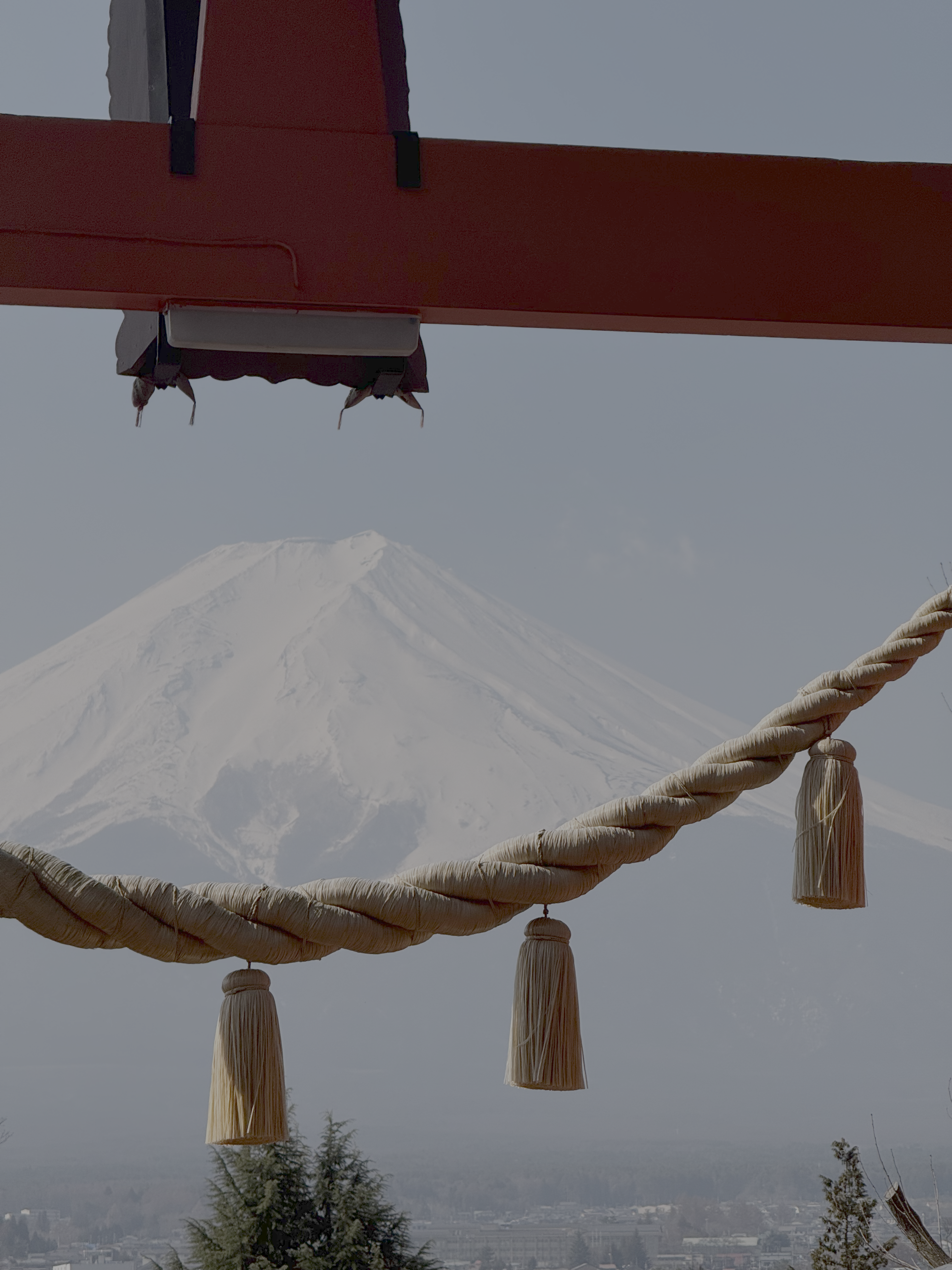
It was an early day. We woke up a little before 5, or rather Morgan did, while I slept as long as I could since I hadn’t been feeling 100%. The plan was to see Mount Fuji in all its glory. We were hoping for clear skies, since the mountain is mostly hidden by clouds this time of year. When we left the hotel to be picked up around 5:50, we were surprised to find plenty of people still out drinking at tables, laughing and having a great time. Most were our age, and I can’t blame them, because it looked like a blast. The drive to our first stop took about 1 hour and 45 minutes, and it was important to arrive early to beat the crowds. While I was journaling about the previous day’s adventures, I looked up from my phone and there it was: Mount Fuji, clear as day. It still had a ton of snow on it, which made it even more beautiful.
We arrived at Arakurayama Sengen Park and were greeted by a series of torii gates marking the entrance to the shrine. It was 400 steep steps to the top. Unfortunately, it was still a little too cold and the cherry blossoms hadn’t bloomed yet, but the view was amazing regardless. The place was already bustling, though there was a higher area above the temple that not many people knew about. You could keep hiking from there in hopes of spotting deer, monkeys, and bears, but most people only cared about capturing the temple with Mount Fuji behind it.
After descending, we continued on to the next stop, Lake Kawaguchiko, where flower beds line the shore beneath Mount Fuji. Clouds were starting to cover the mountain, but we arrived just in time and were fortunate that the sky stayed clear as long as it did. It was a mellow stop. We got ice cream and Mount Fuji apples, then walked down to the beach and watched the fishermen. From there we went to Kitaguchi Hongu Fuji Sengen Shrine, where, as at most shrines, countless white zigzag paper strips hung from the buildings and from natural objects like rocks and trees. These are called shide, and they mark an area as sacred in Shinto. They symbolize purification and are believed to ward off evil and impurity, and their lightning-like shape represents divine power and the presence of kami, or spirits. The shrine was amazing, buried among towering trees in a forest that felt ancient and full of life. Still riding the high of the proposal, Morgan and I hung a plaque at the base of the shrine, wishing for good fortune, health, and happiness in the years to come. We also wished to travel a whole lot more.
Next we drove about 30 minutes to Saiko Iyashi-no-Sato Nenba, a recreated traditional Japanese village. The moment I got out of the car, I smelled something incredible: chicken karaage. So, naturally, I ate chicken karaage, and it was incredible. We wandered through the village, taking in the different houses and learning what they meant to the community. Many of the shops sold handmade pottery (very expensive) and handwoven silk (even more so). We didn’t buy anything except a puzzle to commemorate the day, since Morgan and I like to collect a puzzle from every place we travel together.
Our final stop was Lake Yamanakako, where the plan was to rent a speedboat and then eat, but it was very windy and getting late. If you leave after 2pm, the drive back into the city can take close to 4 hours. We left closer to 3. The food, at least, was amazing. It was a traditional Japanese restaurant serving hoto, a hearty noodle dish, and a Kobe beef skillet with rice, vegetables, miso soup, ginger cabbage salad, and pickles. We had to wait a bit to eat, since it was a small place with only one server, and she was hustling. We got on the road a little before 3, but the damage was done. Maps predicted a 3.5-hour drive for 70 miles, and that’s exactly how long it took.
We made it back a little after 6, which still gave us time to hit the jacuzzi, get ready, and head out. It was our last night in Shibuya, so we had to go out with a bang. I won’t go step by step, but let’s just say we had a really good time. At nearly every FamilyMart we passed, we bought a -196, shared it, grabbed some snacks, and sat on the street watching the city and enjoying each other’s company. City life here is something else. We wandered through shop after overstimulating shop just to take in the sounds and flashing lights. I was in bed by 11:30.
Day 5 - Bullet Train to Kyoto
Today was a travel day! We wrapped up our stay in Tokyo and Shibuya, which was tragic, but it meant we finally got to ride the bullet train. I’ve admired it since elementary school, so this was a dream come true. Our train left Tokyo Station at noon, but public transit can be hectic, so we left extra early and assumed the station would have somewhere to store our bags, freeing us up to explore downtown. Tokyo is an extremely active city, but its shops and restaurants don’t open until around 11am. Luckily, the place I needed to eat at was a cafe that opens at 9. It’s called The Front Room, and it’s known worldwide for its French toast skillet. Of course, the line was long, but we had time to kill, so it was worth it. We waited about 45 minutes in line and only 15 for the food. Meanwhile, Morgan and I got to walk around a bit and soak up a peaceful, calm Tokyo morning.
I ordered two, naturally. One had a fried egg and a thick slice of cured bacon, and the other was the açai version, with bananas, blueberries, strawberries, and açai cream, which served as dessert toast. I also got a tiramisu latte, which was equally incredible. They do a great job of keeping their food and drinks from being overly sweet or loaded with sugar. Once we were stuffed to the brim, we made our way back to the station.
Tokyo’s bullet train station is probably one of the busiest in the world. We boarded at 11:58, and the train pulled out at exactly noon. Passengers get only five minutes to board, which shows just how punctual Japan is. I didn’t know what to expect, but I was surprised by how many stops it made. The first came after only 10 to 15 minutes, and the train didn’t seem to hit its top speed until later in the ride. The trip took only two hours and 15 minutes, and I enjoyed every second of it. I loved watching the countryside roll by and seeing how people live in quieter areas, and I’ll admit I was a little jealous. I took a quick power nap to recharge so the evening was still fair game.
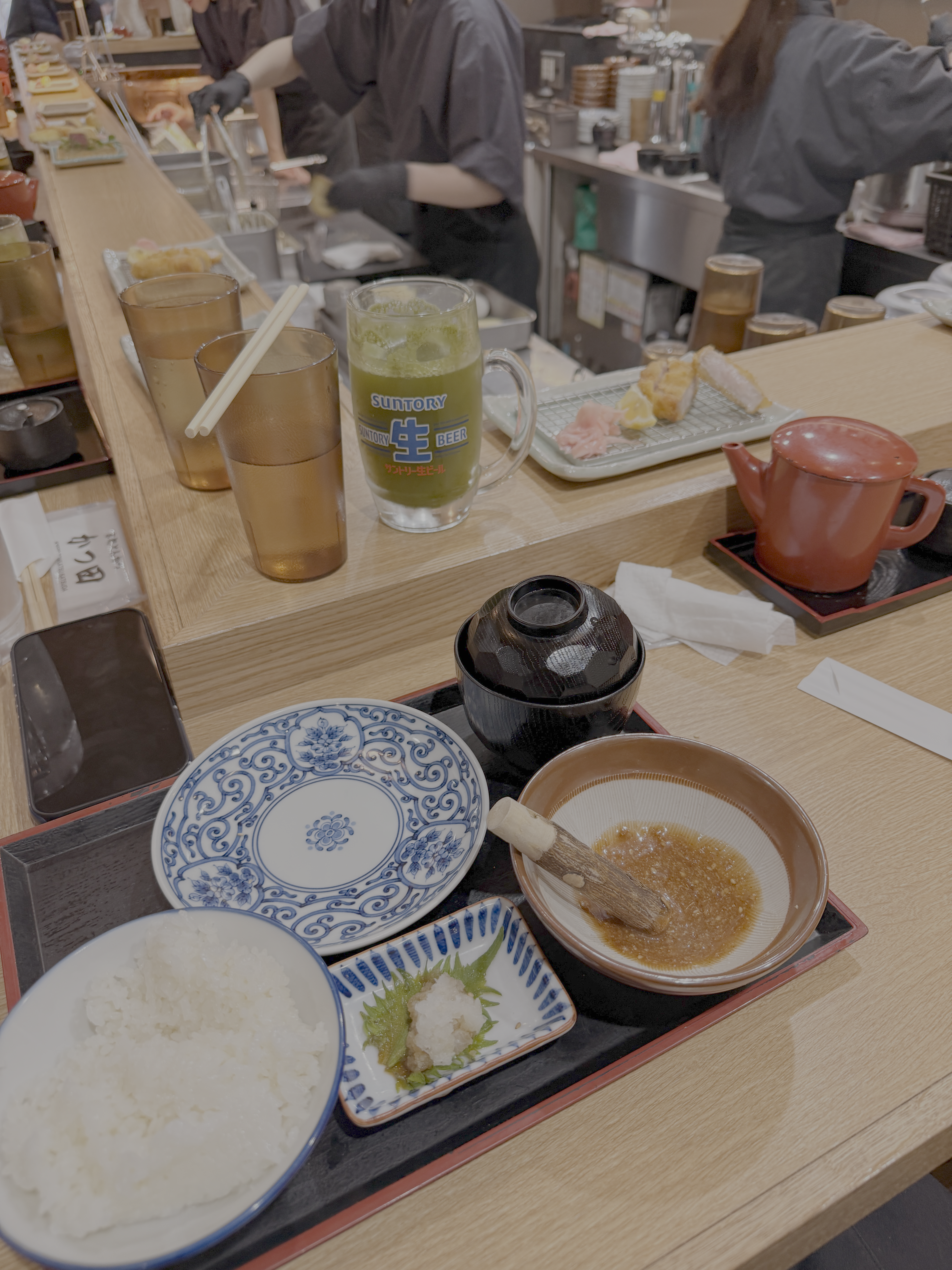
In Kyoto, our place was only 20 minutes from the station, which made getting around easy. We checked in early, put our things away, rested for a bit, and went back out hunting for food. We found an amazing spot, one of those traditional counter restaurants where you sit at the bar and they serve you course by course. I’d been wanting traditional Katsu, and this was the place. When we walked in, they greeted us with open arms. I couldn’t understand the words, but I could tell they were happy to have us. We sat down and ordered right away, an easy decision at a place of this caliber. I got a mix of pork, chicken, eggplant, sweet potato, and a whole egg, with a matcha beer to wash it down. We watched the chef prepare and fry every piece, and we ate each one within seconds of it leaving the fryer. The food was incredible.
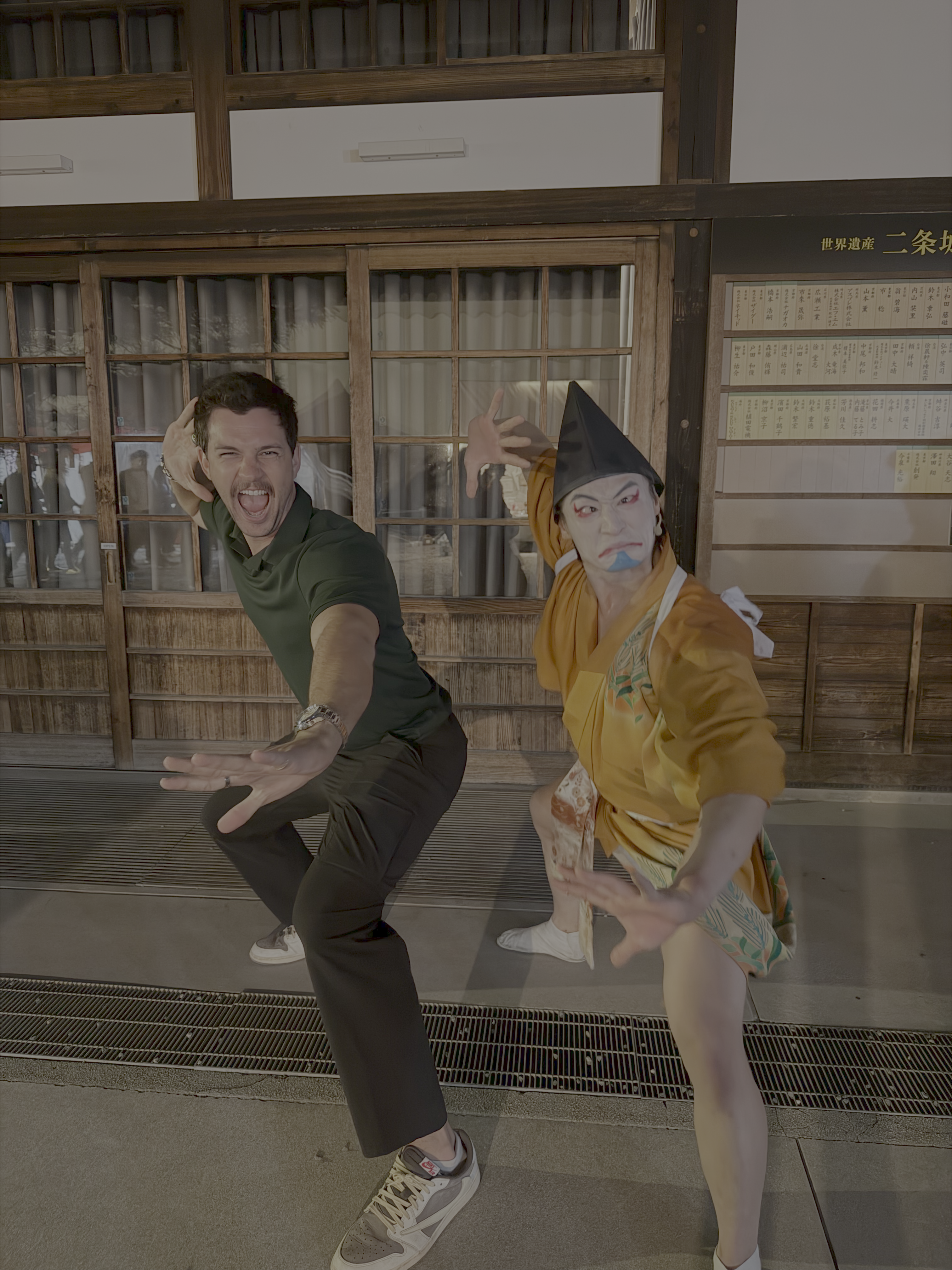
After dinner, we headed to Nijo Castle, which I’d found online for its evening cherry blossom exhibit. They light the trees in a soft pink glow that magnifies their beauty. We got lucky with the line and got in earlier than expected. Tickets were sold out online, but you could still buy them the day of, so we got the extra package that included the Shirogeki show at 6:30pm. We walked the grounds first and then made it in time for the show, which was so much fun. It reminded me of anime, only in real life. The backdrops, costumes, and acting were fantastic, and the story was enjoyable from start to finish. I’d happily see it again. Everything was beautifully choreographed, from the emotional scenes to the fight scenes to the joyful ones with singing, dancing, and cheering. Afterward, we strolled through the street vendors, and I got a photo with one of the coolest, quirkiest performers in the show. Everyone was gracious and respectful toward the audience.
That brought the day to a close. We headed back toward the hotel, but first came the stop that makes a proper nightcap: 7-Eleven, of course. We feasted. I got an egg salad sandwich and added a piece of spicy fried chicken katsu, then washed it down with a vitamin fizzy drink and finished with a creamy ice cream cone for dessert. All of it was incredible. Five minutes after my head hit the pillow, I was out like a light. Another day in the books.
Day 6 - Bamboo, Monkeys, and a Downpour
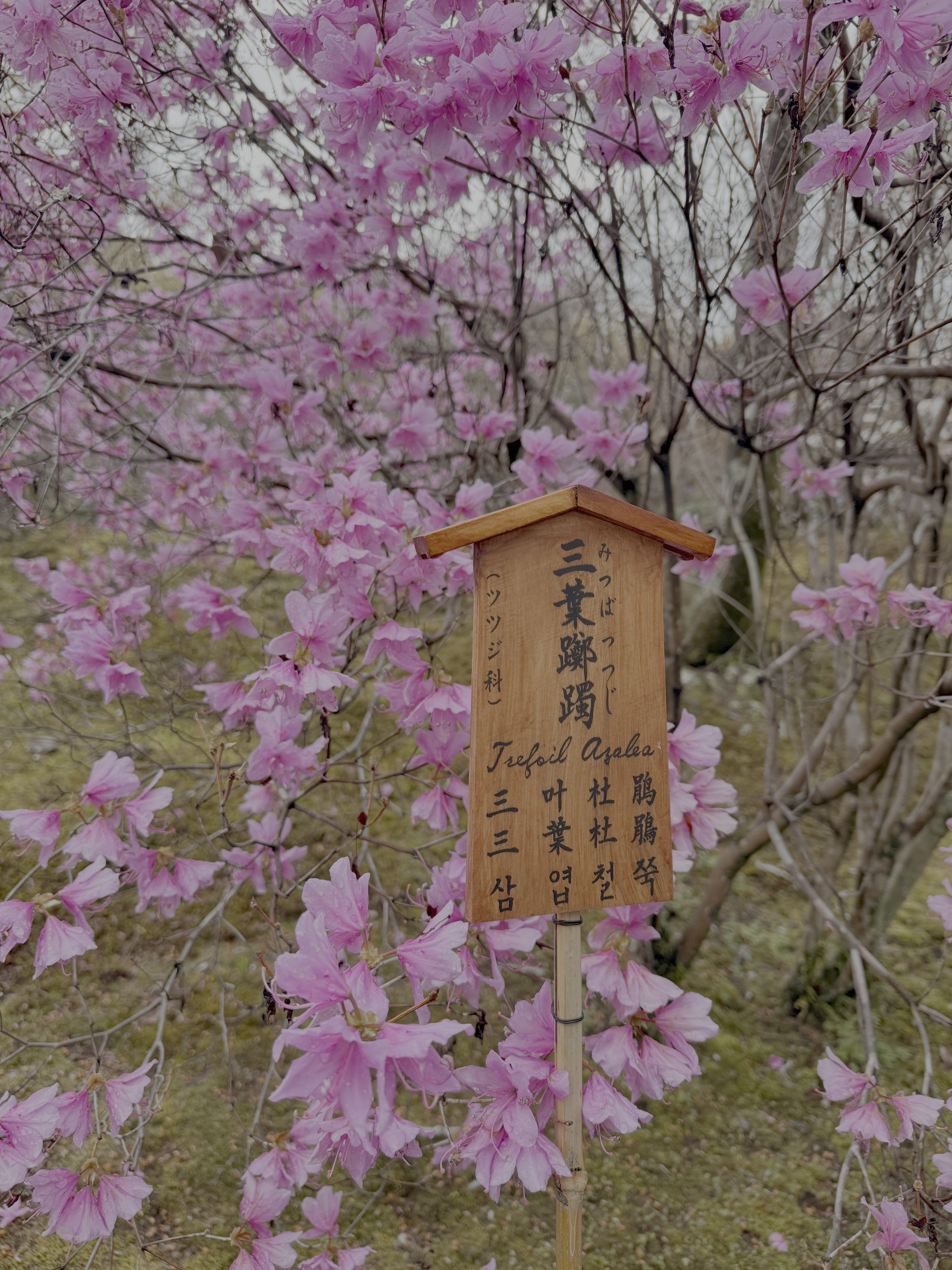
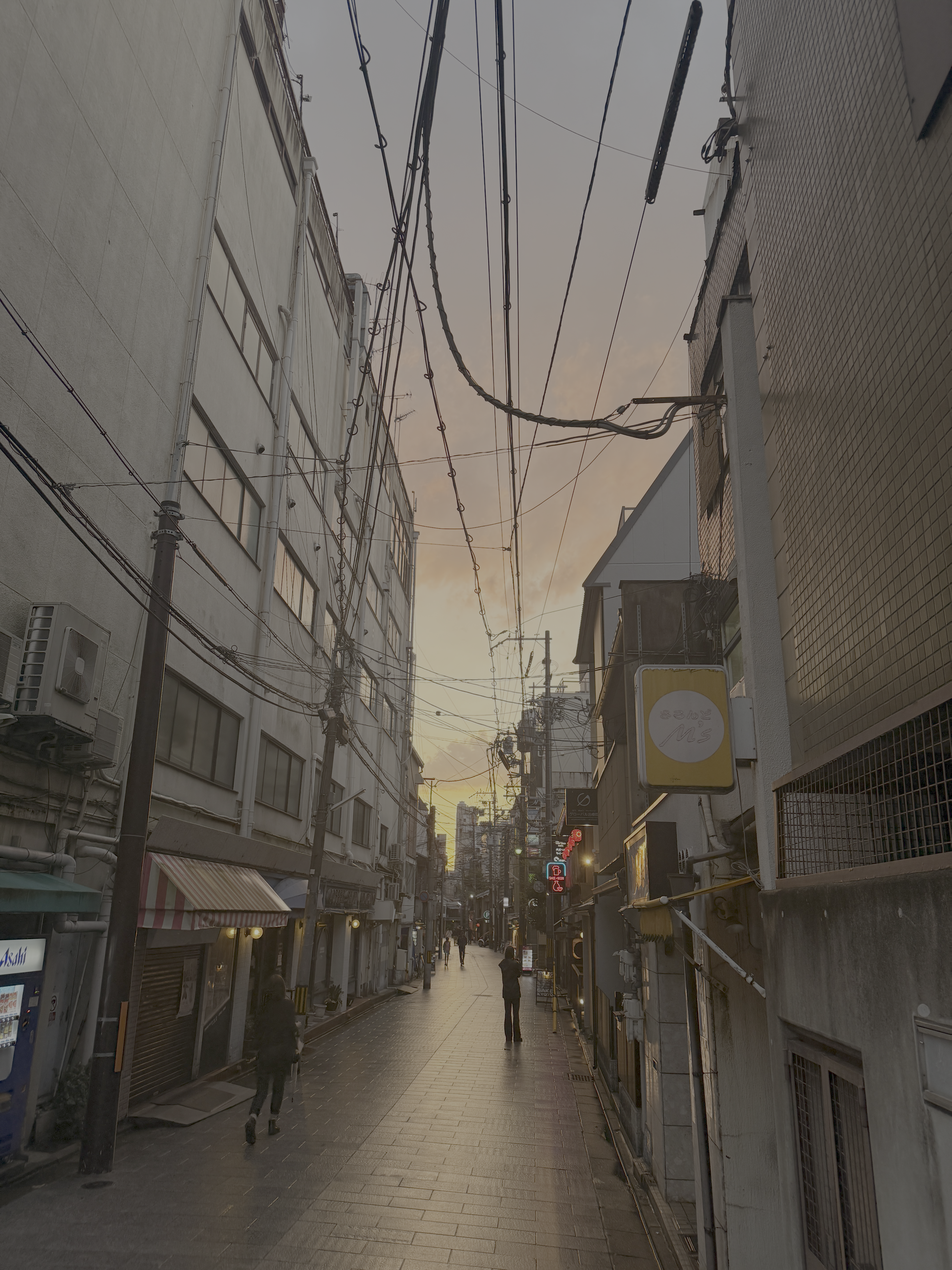
Not going to lie, we woke up late, very late. Our room had no windows, so we had no concept of what time it was, and by the time we got up it was already 8am. With such a late start, we knew the places we wanted to visit would be crowded. The first stop was a 30-minute train ride away. The forecast called for rain, but as a silly Californian who dismisses any rain in the forecast, I ignored the complimentary umbrellas at the hotel entrance. We made our way to Arashiyama, home to the famous bamboo forest, and it was incredible. Filled with old-school architecture and lanterns and signs hanging over the streets and alleys. The forest itself was vast, low-lit, and secluded. One stop along the way was Tenryu-ji, a deeply spiritual temple in Kyoto’s Sagano district. It’s the head temple of the Tenryu-ji branch of Rinzai Zen Buddhism, founded in 1339 by Shogun Ashikaga Takauji. We walked through its many gardens and exhibits before finally emerging into town in search of food.
There are plenty of quaint little restaurants there, but most don’t open until 11:30 or noon. We found an udon place that supposedly opened at 11, but it didn’t open until 11:30, so we wandered for half an hour hoping to find something else. No luck, so we went back to the original spot because everything looked so delicious. At many traditional sit-down restaurants in Japan, whether it’s hot pot, barbecue, katsu, ramen, or udon, the main dish comes with a lot of complementary sides. Here, we got a bowl of udon with fried chicken and crab, pickles, rice topped with seaweed salad and minced chicken, and miso soup. It was incredible, and of course we added a few rounds of chilled sake. Afterward, we noticed a matcha shop serving matcha and sakura ice cream, and we had to take advantage of the convenience.
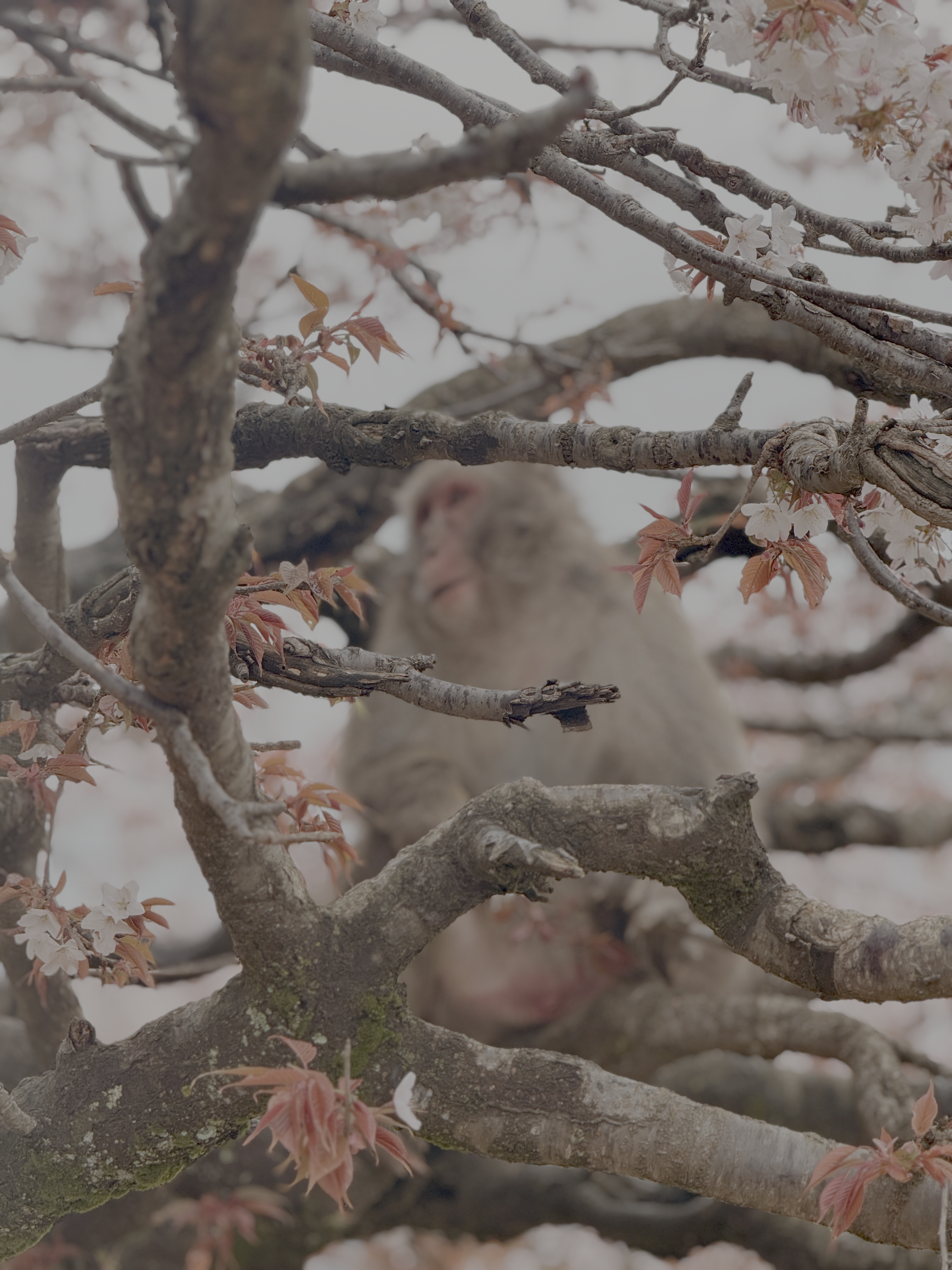
Next on the agenda was the Monkey Park, a monkey sanctuary atop a good-sized mountain. The hike is claimed to take 20 minutes, but I made it in 10, walking briskly and passing plenty of people along the way. I could tell I was getting close when the smell hit me, which was strong and unmistakable. I looked up, and there they were: monkeys, so many monkeys. They were up in the trees, along the cliffs, and hanging around the feeding house. There was even a play area with swings and seesaws. The first monkey I saw was sitting high in a cherry tree, feasting on the blossoms. There were three rules: keep 2 meters of distance, don’t stare into their eyes, and don’t feed them. Easy enough, right? It was a lot of fun to watch how they interacted, and they’re mischievous little critters.
It began to rain lightly while we were up there, so we took shelter in the feeding house. We bought apples to feed the monkeys through the fencing. Nothing was caged in the usual sense. The house is set up so the humans are the ones inside the cage and the monkeys can approach freely. By then it was pouring, so we made the executive decision to make a beeline down the mountain. Of course, right when we passed the point of no return, the downpour turned into a full sheet of water. We took refuge in a few places along the way, but there was no escaping the rain hitting our faces and soaking our clothes. What I thought was a rainproof jacket was not. As soon as we hit the city, we bought a 200-yen umbrella, which did not help. Crossing the bridge over the river, the rain started coming down horizontally, with mini waves hitting the side of my body. By that point, I was already one with the rain and it didn’t even bother me. We took the train back to the hotel for a quick change, about 25 minutes in soaking clothes, brain-dead from the ordeal. Naturally, when the rain started we were at the point farthest from where we needed to be.
Once we dried off, we got a notice that our traditional matcha tea ceremony was that day at 4pm, not the next day as we’d thought. We got ready much faster and, since the rain had stopped, decided to walk the 25 minutes rather than take the 22-minute train. At the ceremony, we put on kimonos we’d picked out and learned how to prepare matcha the traditional way before taking part in the ceremony. Being invited to share tea with someone is considered a high honor, and the tradition is deeply valued. The ceremony lasted 45 minutes, and afterward we changed back and did a little exploring. Another day in the books.
Day 7 - Philosopher’s Path
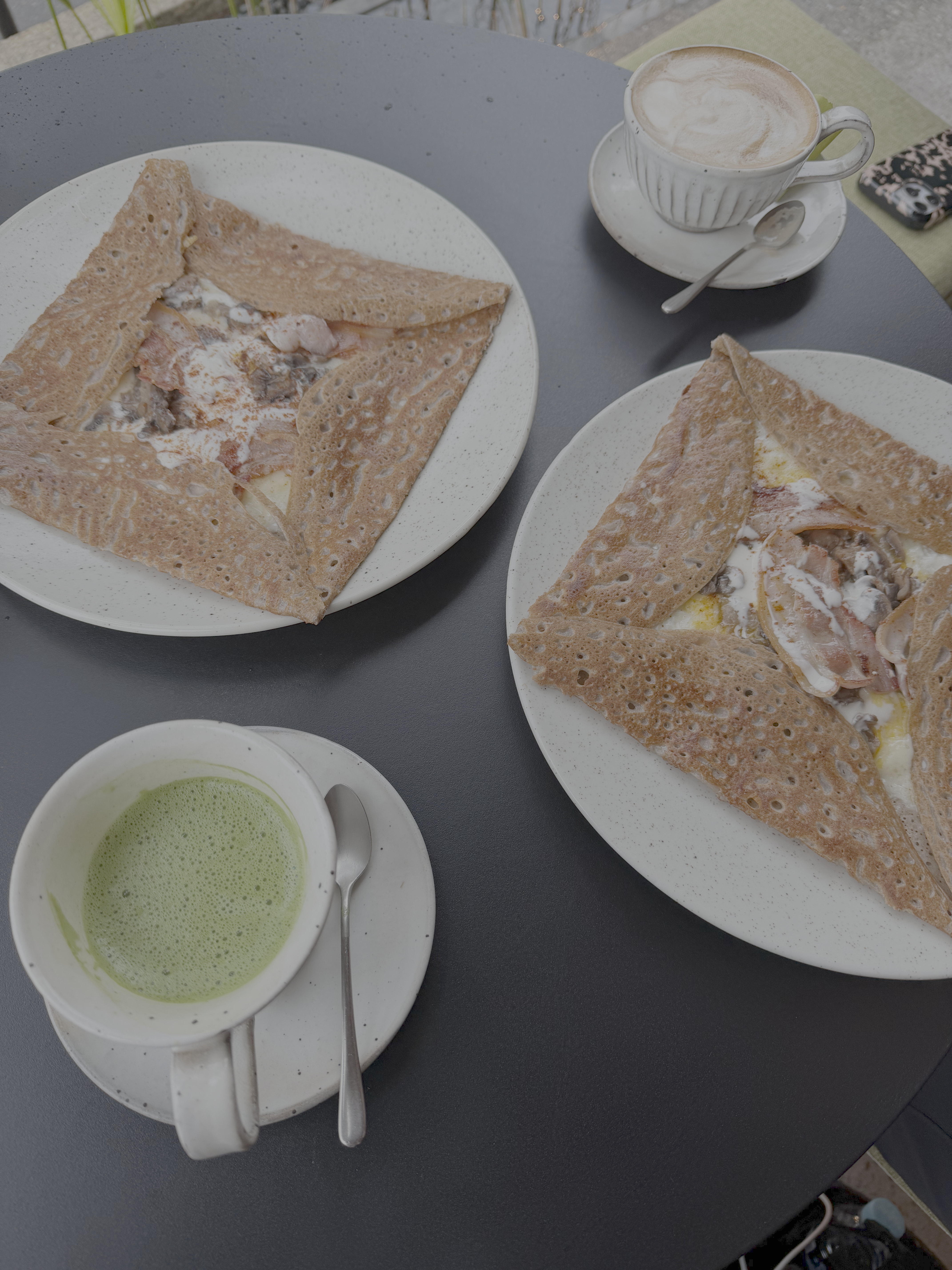
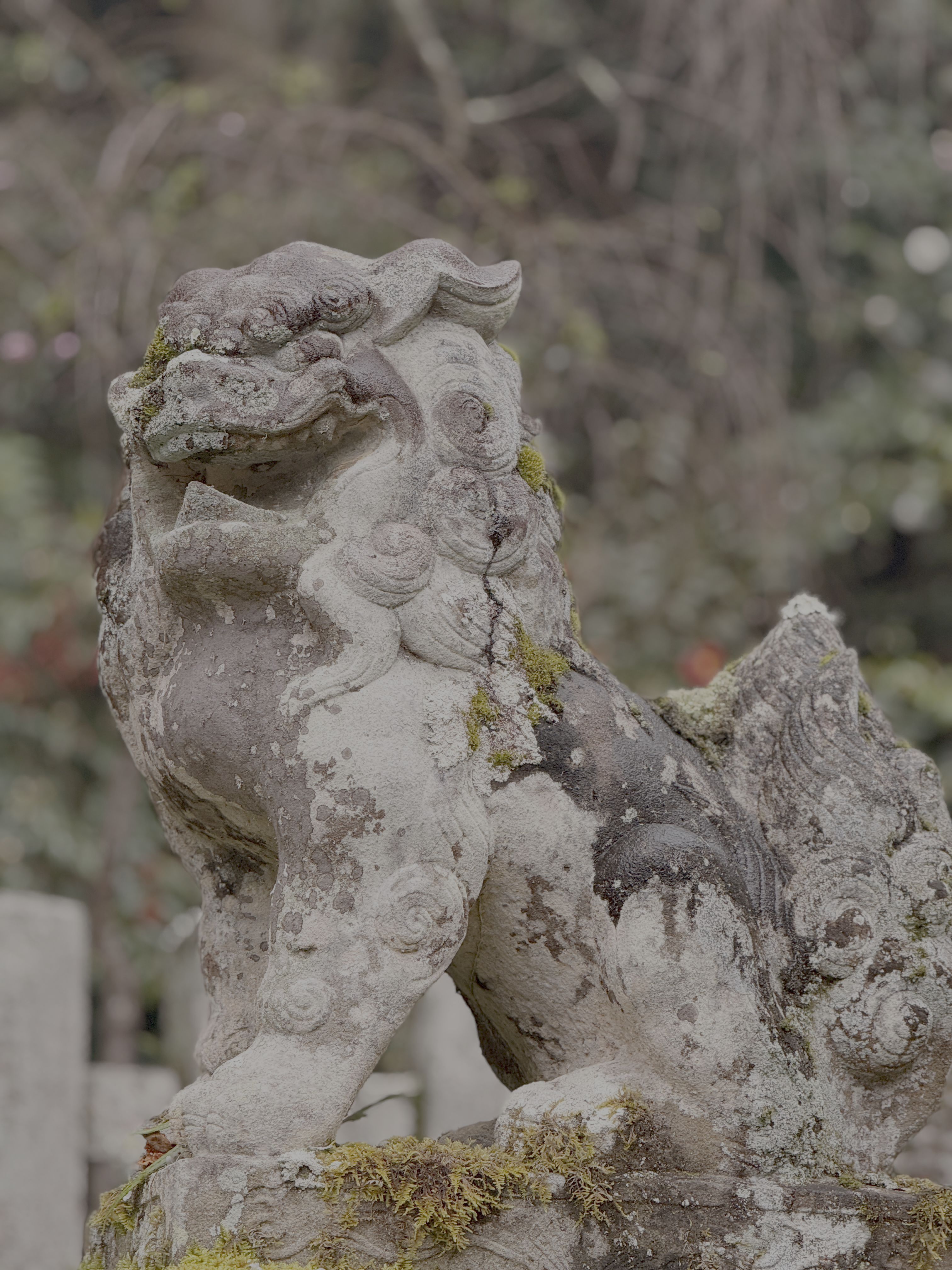
Today was a mellow day. We did wake up relatively early so we could experience the philosophers path without a million people. It was only a 15 minute train ride and maybe a 20 minute walk. On the way we got to look into the crane and turtle garden but couldn’t go in because they opened at 8:30. We also stopped at the Nanzenji Hatto temple. It was a huge compound with a ton of shrines and cherry blossoms. It also had an aqueduct. I think this was the first time in the trip where we had seen outside influence on their architecture. There was also the Hojo garden which was an incredible sight to see. Everything is so manicured and elegant. Not a leaf on the floor disrupting the flow of light. While on the philosophers path we stopped at the Breizh Cafe where we got these incredible buckwheat crepes. They were gluten free so Morgan was able to order one as well. We both got their specialty crepe that had swiss cheese, mushrooms, egg, and some type of sour cream. It was devoured in moments. The matcha latte and cappuccino were the best on the trip. We sat on the patio overlooking the alley while it was raining so it was an incredible vibe to sip on some warm beverages and enjoy each others company. Morgan and I also enjoyed a desert crepe with chocolate syrup and vanilla ice cream. Again, devoured in seconds. Once breakfast was finished the rain was not as bad.
We were more prepared today, warmer clothes with umbrellas was all we needed. We entered the philosophers path at the beginning and took a very long stroll. It was still pretty early in the morning so we were very fortunate to experience it with minimal people. Still a little bit of a drizzle but nothing uncomfortable. No horizontal rain today, yes! It probably took close to 2 hours to walk from the start to the end. Near the end there was this really cool district. It was the Ginkakuji District and they had a route through ginsyadan sand structures, rock gardens, shrines, torii gates, and calm water bodies. It was a very cool edition to the path.
After this we did some alleyway shopping and got some delicious lemon yuzu and mango honey. Legendary honey that wasn’t super sweet. The next stop was the jean place so we took a taxi because the only other way was to walk back the way we came or just walk to the store. We were on the easy side of kyoto and it’s a lot of residential neighborhoods that aren’t as accesible to the city. The taxi ride was only like 10 minutes and cost 1,400¥, pretty amazing.
Next, we hit up a dumpling spot. We got a ton of different dumplings and gyoza, devoured them all! We headed back to pick up the jeans from being done and then headed home. Only a 20-25 minute walk to and from the hotel and jean shop. The walk is also incredible so it’s very well worth it. Tons of cherry blossoms, flowing water through the streets, and then through the alleys with lanterns and traditional signage. We hung out at the room for a bit because was had Omakase meal at 7pm. Too much intermission time so morgan and I decided to walk around the city beforehand an check out some shops the jean man recommended. We will be back. It was required to get to the restaurant 15 minutes before so they could make sure everything was fresh and on time. We were in our own private little room because we were doing the chef’s choice. Whatever he prepared, we ate. I’m not gonna go into detail because I wouldn’t be able to replicate the tastes and flavors and different ingredients he used, but the food was pretty good. We were a little deceived because we thought we were doing a plum targeted food course, but there was no plum in any of the meals and the dessert was a single strawberry and decisive orange slice… Nevertheless, it was an amazing experience and I would definitely do it again and try out some different types of cuisines because this was a lot of fish and shellfish. It would be really cool to do this with like Wagyu or some type of fresh sushi focused meal plan.
Very buzzed off the four bottles of Sake we ordered, we walked home and then hit the hay. Another incredible day and something that I will never forget.
Day 8 - Fushimi Inari and the Sake District
We woke up around 8am, still recovering from the night before, and headed out to Fushimi Inari Taisha. The shrine sits at the foot of Mount Inari, a sacred mountain said to grant good fortune to businesses. It was an easy 25-minute train ride. Google Maps even warned me that the area was “highly busy,” which made me laugh. Fushimi Inari is dedicated to Inari, a deity originally tied to rice and agriculture but now closely associated with business and prosperity. Along the way, I noticed statues of foxes, called kitsune, which are considered messengers of Inari rather than the god itself and often hold keys or other objects symbolizing wealth and knowledge. Walking through the thousands of torii gates, I learned that individuals and companies donate them, each representing a wish or prayer for success. Many had business names written on them, which made the connection to commerce really clear. It made sense that the shrine sits in a business-heavy area, since merchants and companies have worshipped here for centuries. Moving through the gates felt like passing through layers of intentions for prosperity and good fortune.
On the way, we passed through a food market selling all sorts of street fair snacks. We finally tried the cheese-filled waffle, gooey and cheap, but it was just alright and didn’t live up to the hype, given how many people were walking around eating them. I also got a massive crab leg doused in butter and wasabi powder. It was amazing, just a little too big for my liking. At another mini market, we found fresh nigiri, and Morgan and I took full advantage: four pieces of amazing sushi for $12. Then we found a wagyu skewer stand, a candied strawberry stand, a crème brûlée sweet potato stand, and a matcha ice cream shop. All of it was incredible.
Next on the itinerary was the Fushimi Sake District. It has a stunning canal lined with cherry blossoms that cover the water, but the boat rides were sold out, which was a bummer. We moved on to our original plan, a sake tasting. The spot we chose offered an 18-sake flight with descriptions and pairings, and alongside it we ordered highballs, lemon sours, gyoza, salmon and ahi sushi, and wagyu skewers. By the end, we were feeling great. We bought a bottle of one of the sakes we’d had at dinner the night before, the best of the bunch, to bring home for a special occasion.
By then the day was pretty much over. We headed back to unload some things, then went out again to downtown Kyoto to browse shops and food. Morgan and I picked up some cool clothing and found an incredible crepe place. As the shops began closing, we went looking for ramen. We tried a spot that was famous on social media, but the line was far too long and we were cold and hungry enough to faint. We’d passed a good-looking place on the way, so we doubled back and had some incredible ramen. By now, we’ve learned that the social media spots aren’t always worth it. I’m sure the food is good, but it’s rarely better than the places you stumble upon.
The restaurant had all sorts of broths. I got the carbonara-style ramen and Morgan got the salt broth, and both were fantastic. It was my first time trying that style, and I didn’t know what to expect, but it was rich and creamy, like pasta but even better. If it hadn’t been our last night, we would have gone back. Just two brothers slinging noodles and providing excellent service, and I couldn’t have asked for more. Another good sign: everyone coming and going was a local, with no tourists in sight. That’s when you know you’ve found a good spot.
Day 9 - Osaka, Lychee Sours, and a Show
We woke up at a good time since we hadn’t stayed out too late. No matter how much we drink, we never seem to wake up hungover, which is pretty incredible. We’d planned to take the bullet train to Osaka, but it takes so much time to figure out that we went with regular public transit, which we’ve gotten decently good at navigating. We got on around 9am and were in Osaka by 10:30. Everything has been so close, which is amazing. I don’t do well on an empty stomach, so finding food was the first priority. My friend Cody and his brother Cole happened to be staying in Osaka, so the plan for the day was to meet up and go drinking, a lot of drinking. My mom’s day was decided for her when we found out she’d left her computer back in Kyoto, so she headed back for it, about an hour each way.
Cody and Cole were already wandering Dotonbori, the world-famous stretch of alleys packed with food, shops, and cafes. It had much the same vibe and many of the same stores as the other cities, and there were so many people. After a few shops, we made our way to a bar called 8ish, which had great hospitality and amazing lychee sours. I had four, and then Cody was gracious enough to buy us a bottle of champagne to celebrate our engagement. The bartender followed that up with a round of free shots.
After that, we did some thrift shopping to look for hidden gems, and I found a rad flannel bomber jacket printed with the regions of Japan and the alcohol each is known for. Then our taste buds called for karaage and more lemon sours, and we found a spot serving exactly that, a four-minute walk away. We had a few rounds and enjoyed each other’s company. After, we went to a sister bar of 8ish, where the bartender gave us a round of fireball shots, and then another, and then we had two rounds of lychee sours.
By then it was 4:05, and we had a show to be at by 4:15, a seven-minute walk away. We ran, and then ran some more, and made it by 4:10. My mom was not thrilled, but we were so boozed up and smelled so much like a Friday night that it was hard for her to stay mad. I’ll admit I was in no state to follow the play, and I fell asleep within the first 20 minutes. The experience was great, but it’s hard to stay engaged with something performed entirely in Japanese. The first act ran two and a half hours. The second was a dance, and it was very good: a young girl, maybe 6 or 7 years old, facing off against an established swordsman. She held her ground and eventually got him to concede, in a playful, friendly battle that drew plenty of giggles from the audience.
Once the show ended, we hit the town in search of food. The bartender had recommended a ramen spot, but the line was 15 people deep with only 7 seats at the bar, and with four of us it would have been about a 45-minute wait. We left in defeat and filled the hole with more shopping, stopping at Onitsuka Tiger to get Morgan’s mom a pair of shoes, a classic thing to bring home from Japan. Then we did what we do best and walked until we found a place that wasn’t overflowing with people. We landed at a decent ramen shop that also served gyoza and karaage, along with massive mugs of lemon sour, which were a must. Between lunch, second lunch, and dinner, I ate close to 20 pieces of karaage. It was delicious. After dinner, the night was nearly over. We walked home and went to sleep around 10pm, since tomorrow’s plan was Nara and its bowing deer, and sleep was crucial.
Day 10 - Bowing Deer and Sumo
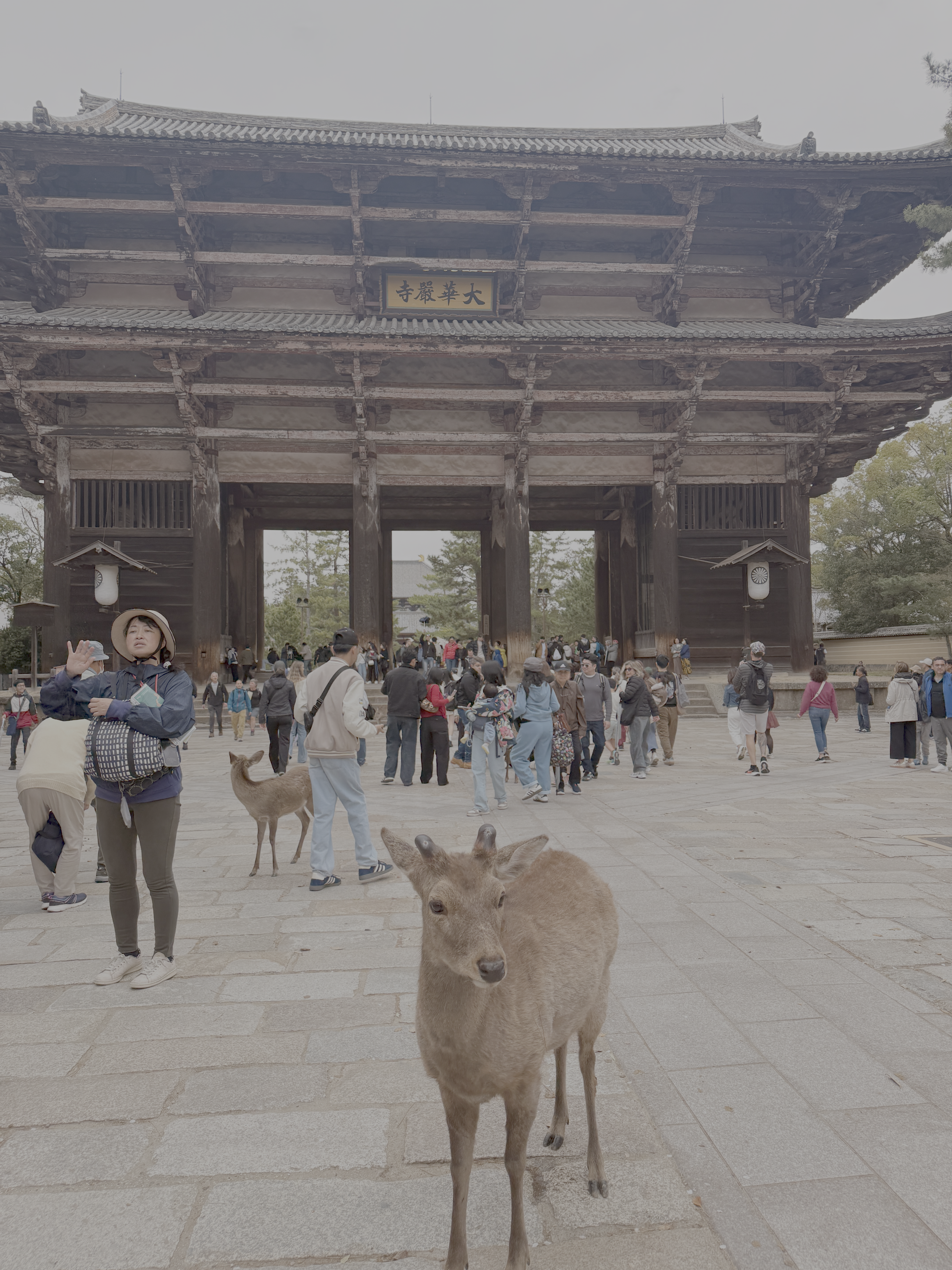
Morgan and I woke up around 7:30am and headed down to the lobby for a quick bite. Mornings have been tough because most cafés and food spots don’t open until 11, which is far too long to go without food. The hotel breakfast was terrible: runny, cold scrambled eggs, which seems to be how they do them here and something I can never get behind. I got a coffee and Morgan got a matcha, and both were underwhelming, but beggars can’t be choosers. Today’s mission was Nara and its famous bowing deer, just a 40-minute train ride away. The moment we arrived, we could sense how many deer were roaming around. We walked up a small hill into the main park, and there they were: hundreds, maybe thousands of deer, hassling and terrorizing tourists for cookies. The looks on some of the tourists’ faces were priceless. People were being nipped at and stalked, and the deer were head-butting each other over the next cookie. The cookies cost ¥200, so we bought a few packs and went looking for the lonely, sad-looking deer. The second a cookie came out, deer from 10 meters away came hurtling toward us. I never got bitten, but my mom and Claudia got nipped at quite often, and Morgan ran around scared, showing the deer her empty hands. We fed them for 30 minutes to an hour, then did some sightseeing.
We started at the Manyo Botanical Gardens, but entry was ¥1,000 and hardly anyone was inside, so we skipped it, since the surrounding landscape was just as beautiful. Next was Todai-ji Temple, which was absolutely massive. It had started to rain by then, but nothing we weren’t used to. It drizzled for the first 30 minutes, then came down harder, so we ducked into a local soba spot. It was one of those tiny traditional restaurants where you take off your shoes and sit on a cushion. The tempura was phenomenal, light and crispy, and although I’m not a huge fan of vegetable tempura, these were still good. The noodles were great too. I’m a little over the fish broth, but it was delicious and I’d happily go back. The green tea was a welcome addition on such a chilly day. When we finished, Morgan and I bought an umbrella, since we didn’t want to get soaked again, and took the train back toward the hotel.
On the way, we stopped in downtown Osaka so my mom and sister could get tattoos. I was going to get one too, but they quoted me $650, so I passed. Maybe next time we’re in Japan. At least I found what I wanted, so now I can sit on it longer. I used the time to shop and thrift, and of course to eat. We found a cute little ramen shop with one guy inside watching a baseball game and only four things on the menu. I got the ramen and Morgan got gyoza. It was by far the best ramen of the trip, even though some of the shoyu base came from a big can sitting on top of the stove. The best part was that it was only ¥1,500. On our way back, the smell of a taiyaki shop drifted down the alley. We hadn’t tried one yet, so we indulged: a chocolate one, a cream-filled one, and a matcha one, plus matcha ice cream. With our stomachs full, we stopped at our favorite bar for lychee sours. By then it was pouring, and my umbrella had been stolen from a konbini, with a mile still to go. Let’s just say I got drenched and barely made it back. We lay down for a bit to recover.
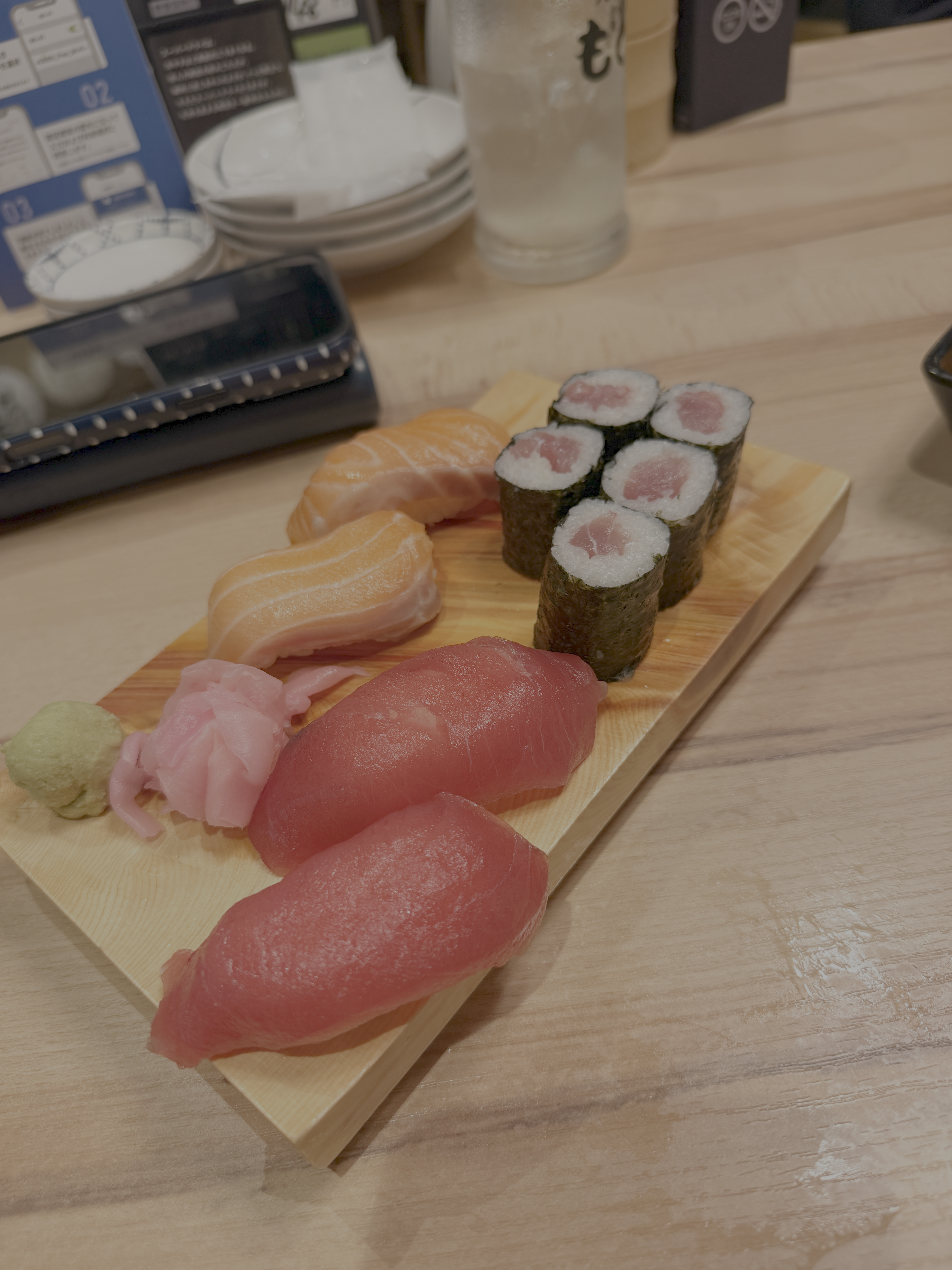
We had a sumo show at 8pm, so Morgan and I headed out early for a quick bite at a sushi place. The food was solid, but the lemon sours were not good. We ordered two salmon nigiri, two medium fatty tuna, and a tuna roll, all delicious. We couldn’t eat too much, since we’d be getting bento boxes at the show in less than an hour. On our way out, we still needed something to quench our thirst, so we stopped at the Lawson across the street, very conveniently, before making our way to the sumo hall in downtown Osaka.
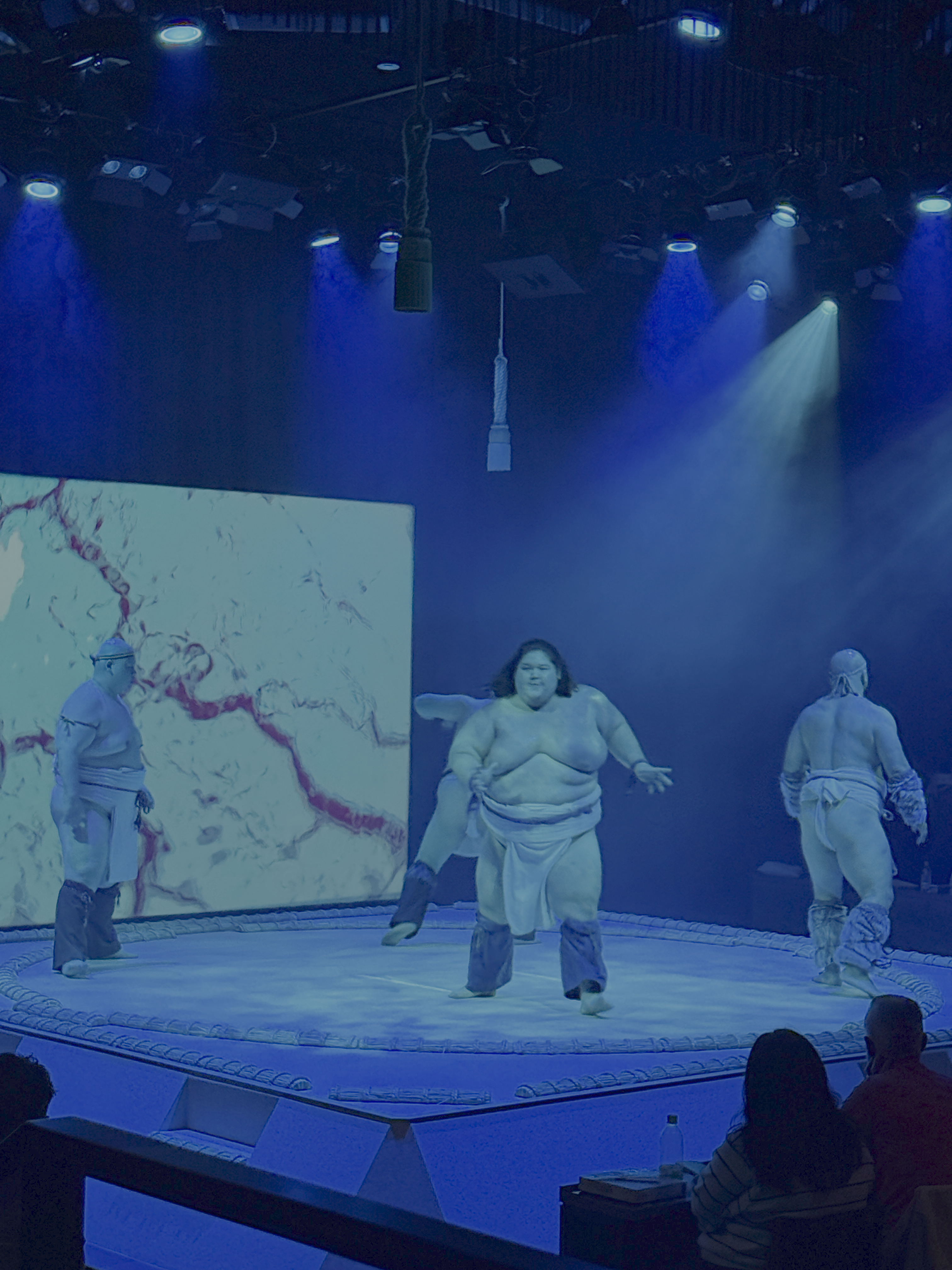
The show was incredible. It wasn’t a traditional sumo tournament, but it blended the history and cultural side of the sport with a live demonstration. Four wrestlers were featured, three retired and one still active. The active one, Toma, was an absolute menace. He weighed 230 kg and steamrolled through all of the retired wrestlers. The first segment covered the history of sumo and its role in society. Then they went over the rules and demonstrated what is and isn’t allowed. After a short break, they came back out for a small tournament among themselves, and Toma won easily. He was dripping sweat from how much he was moving, and he could go into a full split, which was almost terrifying to watch. They were all cheerful and silly, and it was fun to see them feed off the audience’s energy and reactions. At the end, five people from the crowd were invited to take their best shot at the wrestler of their choice. Claudia was one of the chosen, since our booth came with a free entry. I wasn’t selected, so maybe next time. It was a great time.
It was pouring again on the walk home, but luckily I had brought an umbrella from the hotel. Morgan and I were hungry again, so we stopped at a ramen shop in Dotonbori for another incredible bowl, plus lemon sours and gyoza. It even came with a bowl of rice topped with green onion and a soft-boiled egg. We crushed it and didn’t leave a single bite. It was almost midnight by then, so we headed home so we wouldn’t be too tired tomorrow, since we wanted to be energized for our last full day.
Day 11 - Random Day
I woke up in a panic this morning. We’d had a very late night, so I may still have been a little tipsy, and I thought today was the day we traveled home. Thankfully, Morgan, lying next to me, talked some sense into me and reassured me that today was our last full day. We woke up relatively early because the stakes felt high, with the trip coming to an end. It was hard to stay present with the dread of going home hanging over me. We had no plan, since we’d done everything we set out to do, but after meeting my mom and sister in the hotel lobby, we decided to check out Osaka Castle. We knew it would be crowded on a Sunday, but we went anyway. Many attractions, shrines, and castles sell tickets for specific reserved times, and we knew we didn’t necessarily want to go inside the castle, just explore the grounds. It was about a 20-minute train ride, then a 15-minute walk through the park. Locals were out in full force, having set up early for family gatherings and picnics. The park was full of cherry blossoms, and with a bit of wind, petals drifted through the air and landed in our hair and on our shoulders and backpacks. It was a magical walk up to the castle.
By the time we reached it, things were busy, with street stands and vendors selling carnival-style Japanese food. We stuck it out and made sure to see the castle before it got even more crowded. It looked very different from the others we’d seen, with a contrasting palette of pastel forest green and cream, and lots of gold accents along the edges and roofing. After soaking it all in, we regrouped to decide where to go next, and all of us started scouring the internet like teenagers.
The train ride took about 30 minutes, and the aquarium was in a very different part of town. I won’t go into much detail, since it would take hours to describe everything the world-famous Osaka Aquarium Kaiyukan has to offer. There were otters, ducks, masu salmon, ayu sweetfish, tufted puffins, bottlenose dolphins, bull sharks, yellowfin and bluefin tuna, leopard sharks, guitarfish, whale sharks, bat rays, manta rays, and so much more, representing habitats from across the Pacific Rim. If I remember correctly, the walkway stretches about 1,000 meters, and of course we did all of it. It spirals down through seven stories like a merry-go-round, with the tanks getting bigger and bigger. The final exhibit was a pitch-black jellyfish room, and it was incredible. Watching them drift so peacefully was deeply relaxing. The whole walkthrough took close to three hours, and it felt bittersweet, since it was one of the last big things we’d do on the trip.
We slowly made our way back toward the hotel, and on the way I found a gyoza shop with tons of varieties. Gyoza was one of my mom’s and Morgan’s favorite foods of the trip, so we had to take advantage while we still could. I ordered about 10 different gyoza dishes over the course of lunch and had four rounds of drinks, and to be fair, so did everyone else. We ordered what felt like the entire menu twice and kept the cook busy, and she was working alone, apart from a helper who took orders and washed dishes between jobs. The people who run kitchens in Japan are so skilled and sharp at handling that kind of pace. The bill came to $70 for four people, all that food, and four rounds of drinks. Absolutely unreal.
We continued the walk home, and along the way I spotted an archery stand where you can shoot eight arrows. I needed to feel like a samurai, and we still had plenty of yen to spend, so I figured it was worth it. It was super fun, super hard, and very satisfying when I hit the target. My first shot was my best, just centimeters from the bullseye. The rest weren’t as good. We finally got back to the hotel and had only an hour before heading out again for teamLab, a light show in Nagai Park. They create incredible interactive art displays, all lights and colors, and it’s hard to put into words. The designs were intricate: massive eggs scattered through the forest, giant eggs you could jump into and push around, and glowing tubes shooting up into the sky in shifting colors. The best by far was the cherry blossom installation, where the lights hitting the blossoms made them look like crystals. It was an emotional experience, because I knew deep down it could be the last time I’d see such marvelous trees. I know I’ll come back to Japan, but probably not during cherry blossom season, so it was a bittersweet moment.
After the exhibit, we headed home, but before calling it a night we went back to the ramen shop from the night before, where we went all out: three rounds of drinks and our own bowls of ramen with gyoza. It was a great way to cap off the trip. We got home just after 10pm and went to sleep, well fed, well buzzed, and well satisfied with an incredible trip.